
About
careQ - Digital Waiting Room Queue
8 Week Service Design Project
University of Texas at Austin | 2025
Collaborators: Alice Qiu, Katres Brahmnhatt, Jincy George
My Role: 3D Modeling, Rendering, UI/UX Design
Tools: Figma, Miro, Revit, D5 Render
For a healthcare systems design course, our team was tasked with improving the patient experience in clinical waiting rooms. We chose to study primary care offices, specifically observing spaces that see hundreds of patients daily, yet foster high levels of anxiety and uncertainty around wait times.
Goal
How might we reduce patient anxiety and build trust in healthcare waiting rooms designed around unpredictable schedules? Our challenge was to create an intervention that transforms moments of frustrating uncertainty into opportunities for transparency and acknowledgment.
Outcome
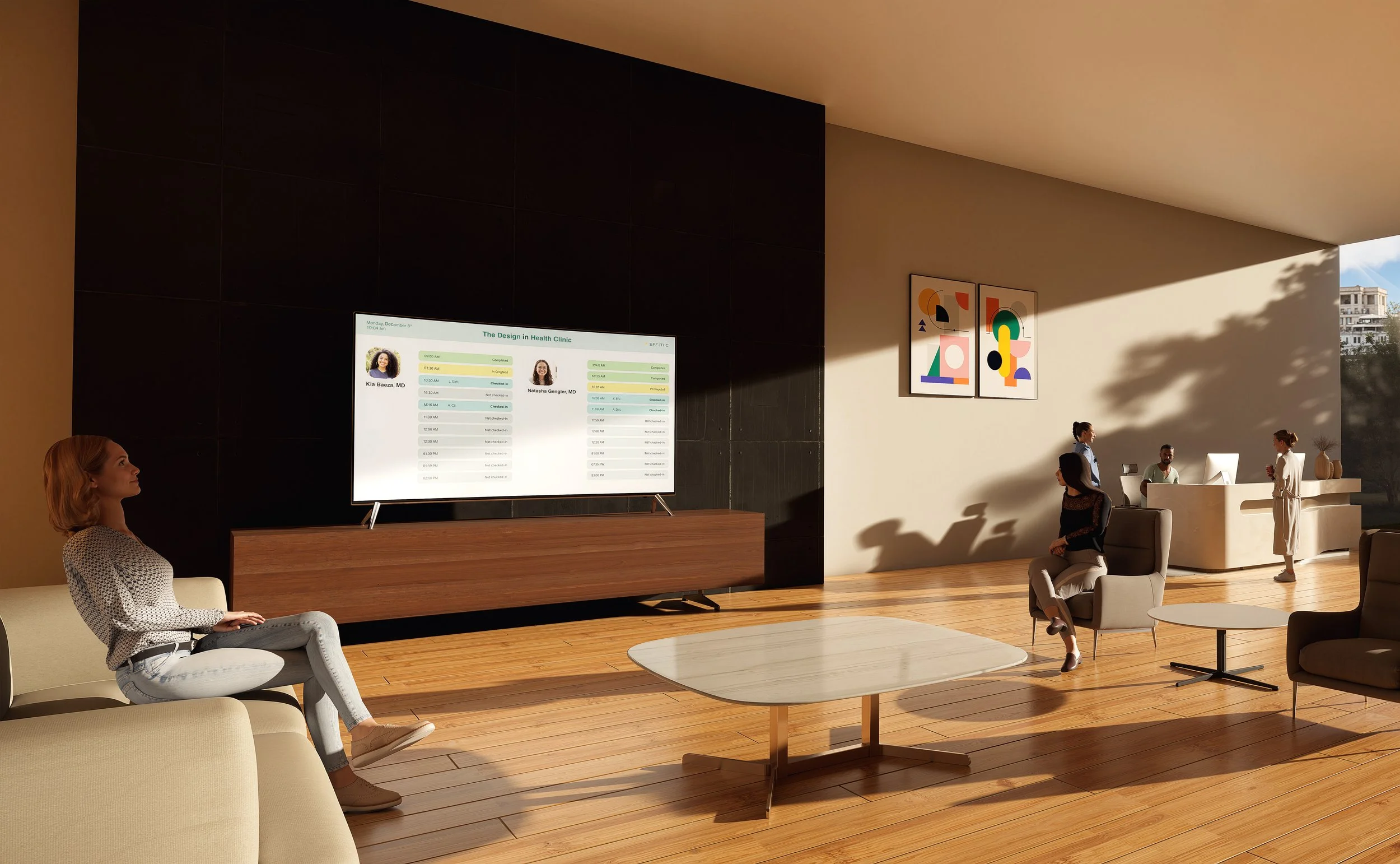
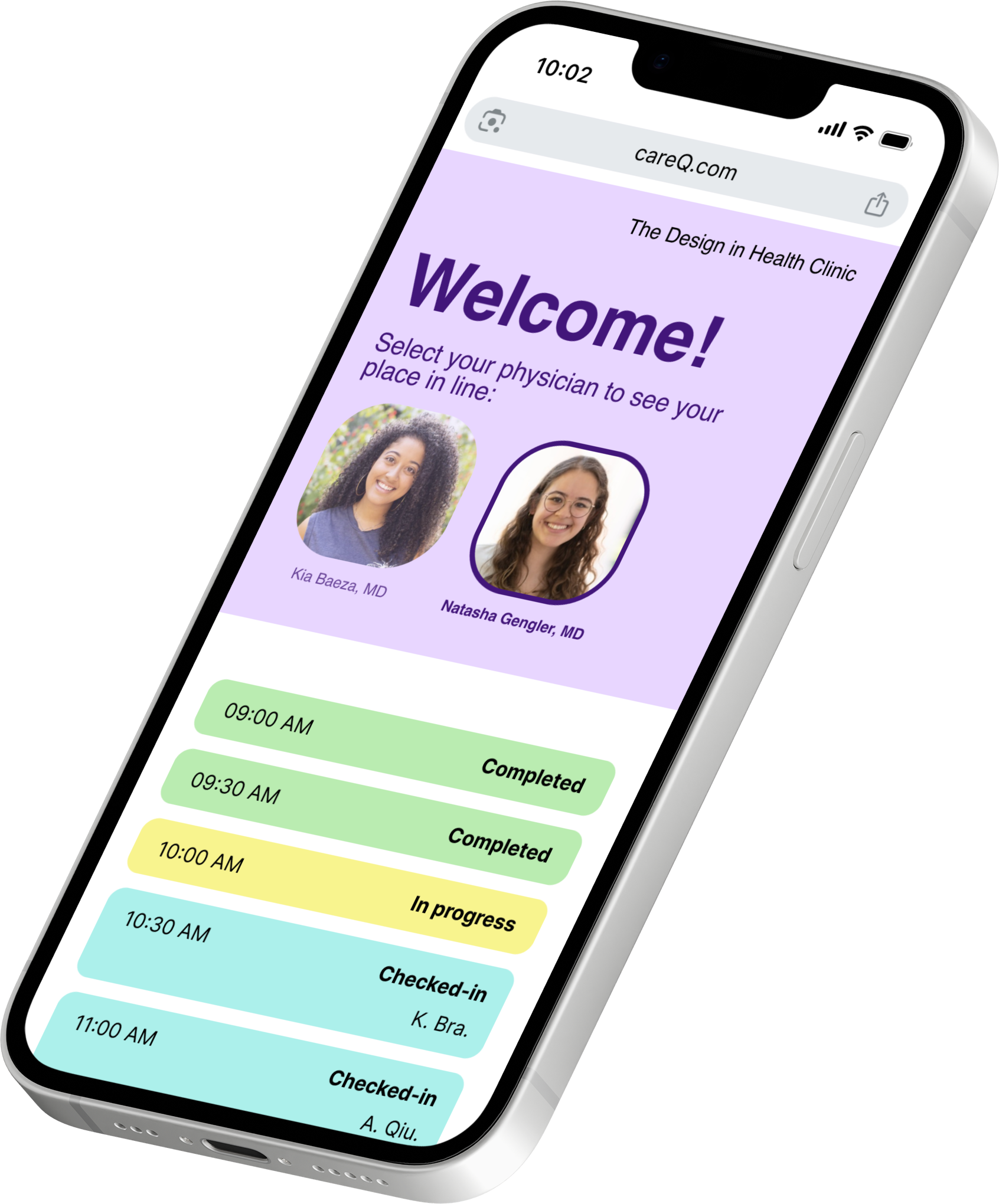
careQ proposes a multimodal queue visualization system that provides patients with clear visibility into their position and status in real time. The design creates a more transparent waiting experience in a space where everyone is typically left wondering, "When is it my turn?"
Research Foundation
Understanding Waiting Room Anxiety
How many times have you sat in a waiting room wondering, “When is it my turn?”
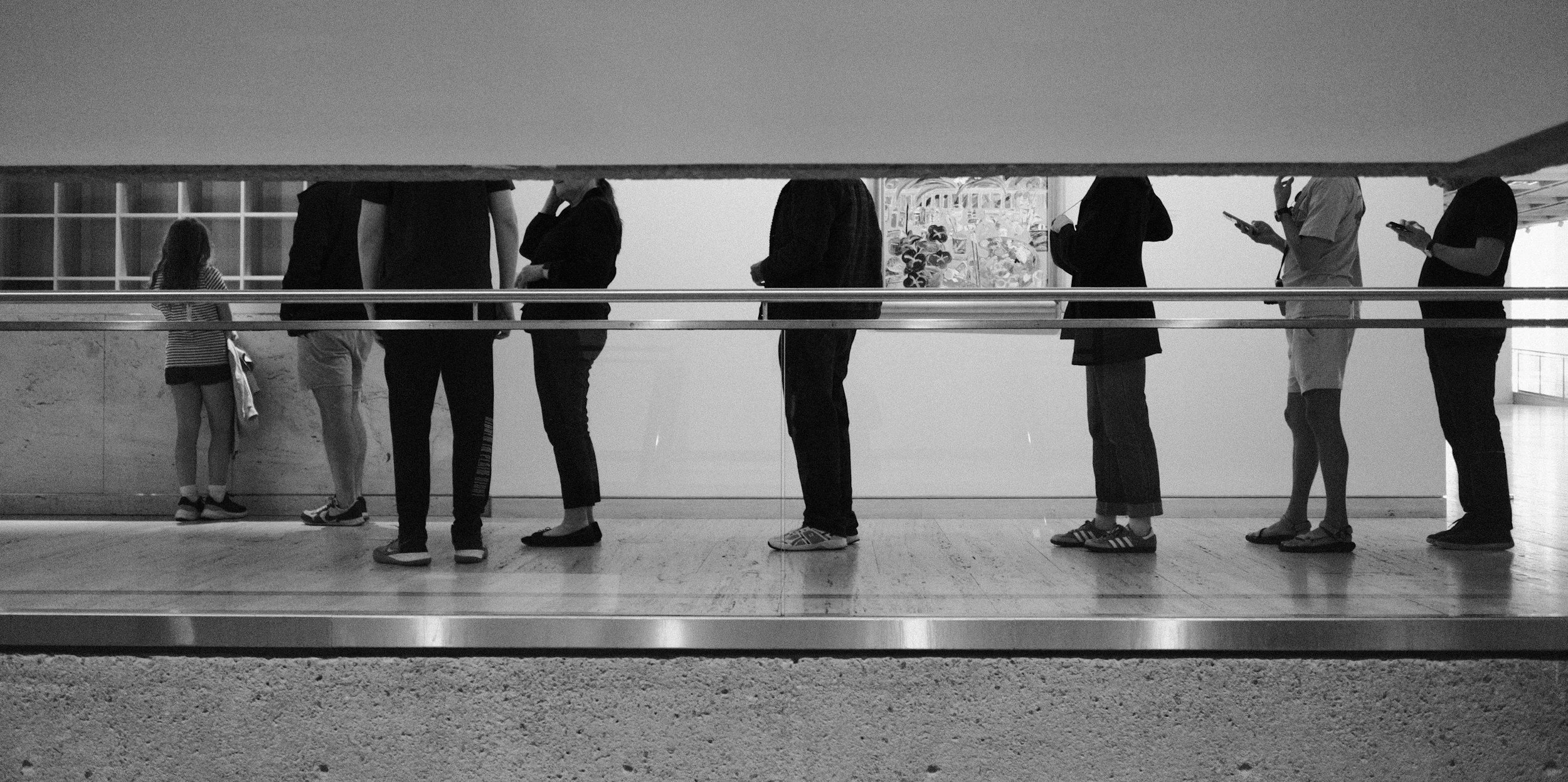
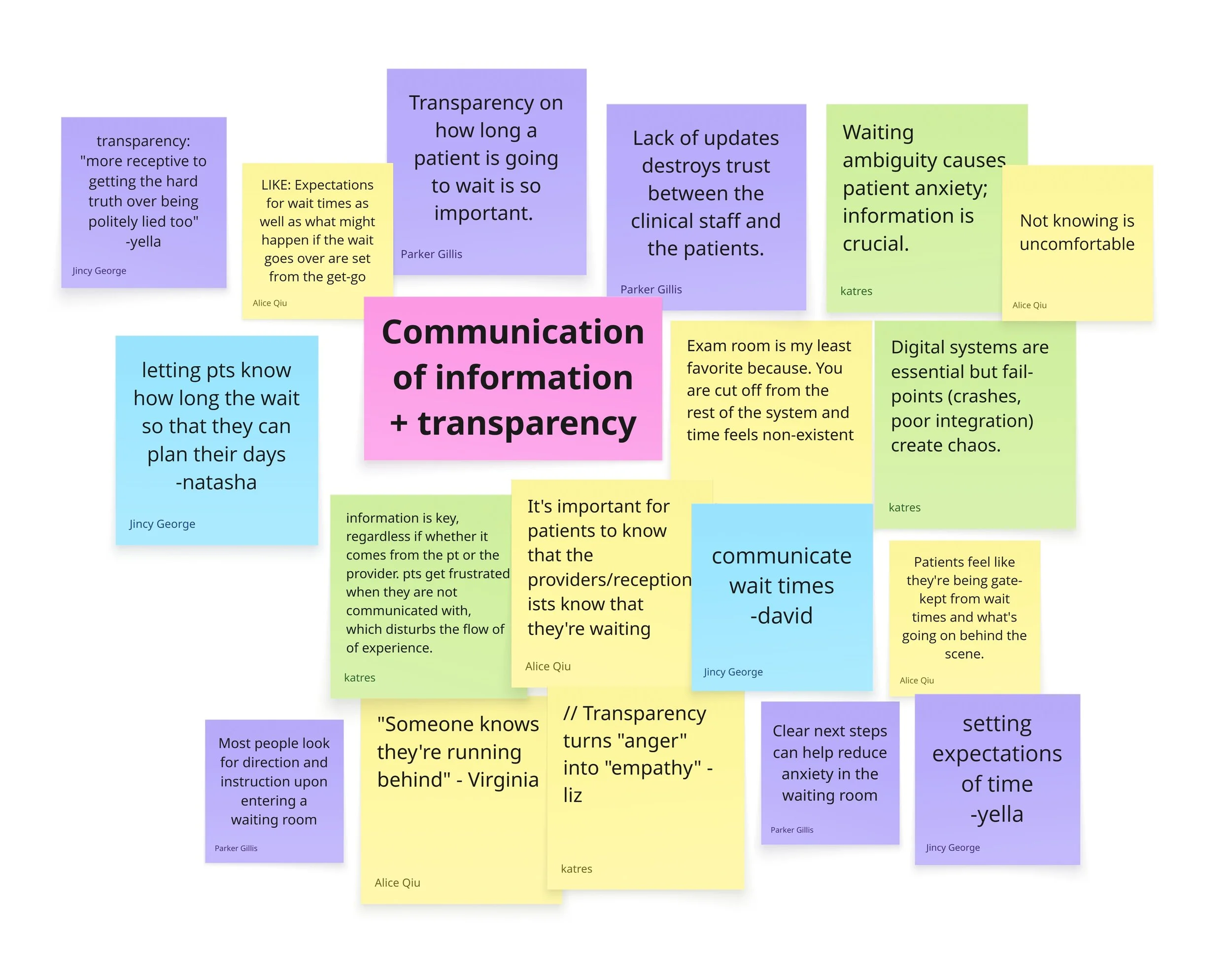
We conducted stakeholder interviews with clinic staff and patients, observed waiting-room behaviors through shadowing at primary care offices, and analyzed secondary research on queue psychology and patient experience. Through affinity mapping, we synthesized hundreds of data points to uncover the core issues driving patient anxiety.
Our research revealed that uncertainty, not duration, creates frustration. After just 20 minutes, nearly 60% of patients feel frustrated, regardless of how long they'll actually wait. We discovered that patients who found the waiting room unpleasant on their last visit were 5 times more likely to be dissatisfied with their overall healthcare experience.
What Patients Told Us
“Regardless of how long you tell me it’s going to be, I’m stuck with this health service no matter what. I prefer to know how quickly to be in and out, but with the visual system, so you can manage your time better”
“I know they have a system, and I’ll get seen, but it’s less friendly. There’s just more ambiguity with the wait time.”
Design Principles
Translating Research Into Framework
Design Principles
Our research insights translated into three core design principles that guided every decision in creating careQ:
Transparency Over Precision
Patients don't need exact appointment times; they need to know where they stand in the queue and that their wait is being acknowledged. We focused on clear status communication rather than promising specific times that
Value Through Communication
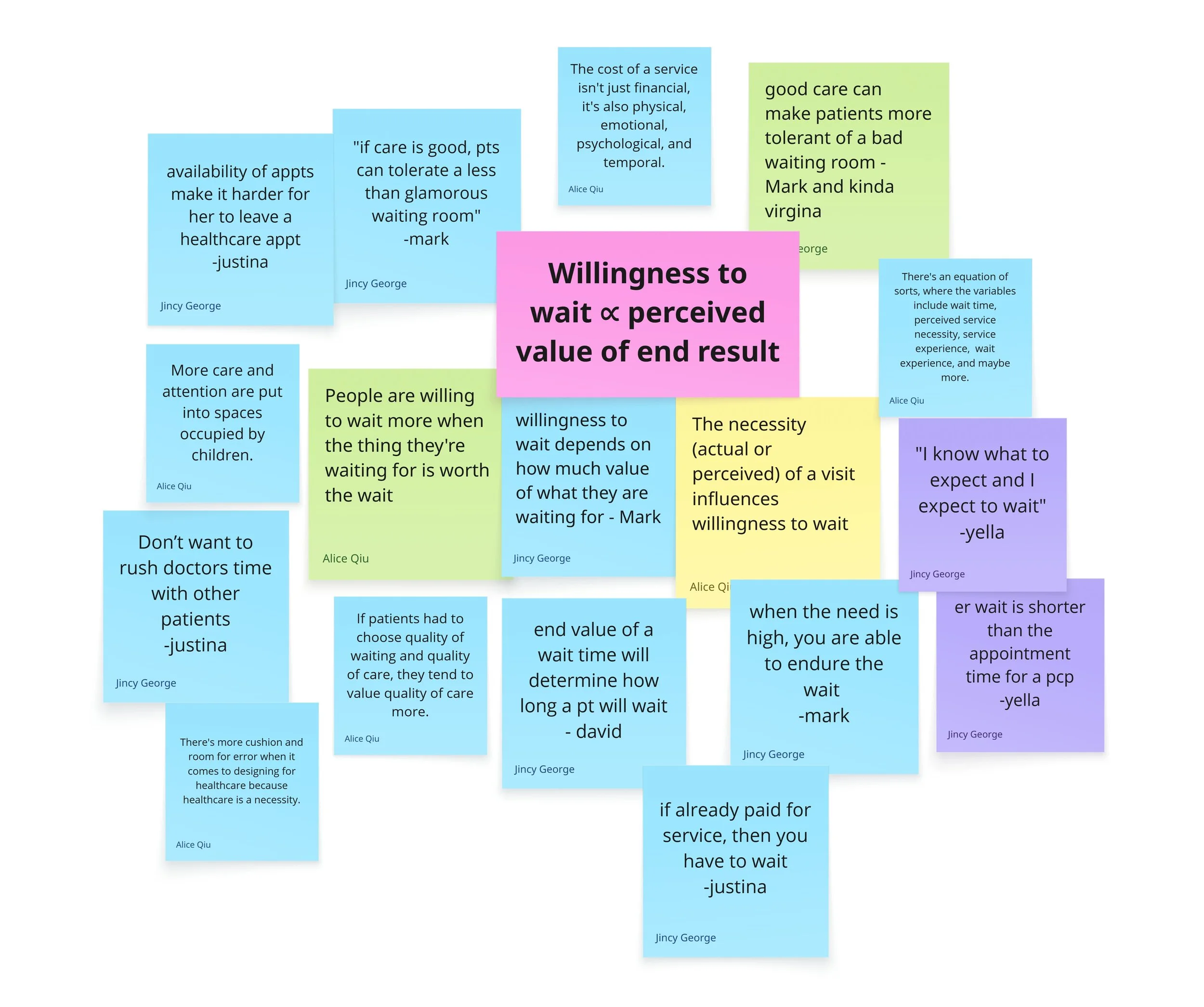
A patient's willingness to wait correlates directly with how valued they feel. By making the queue visible and showing progress through different statuses (checked-in, in progress, completed), CareQ validates that each patient's time matters and the system is moving forward.
Minimize Friction Points
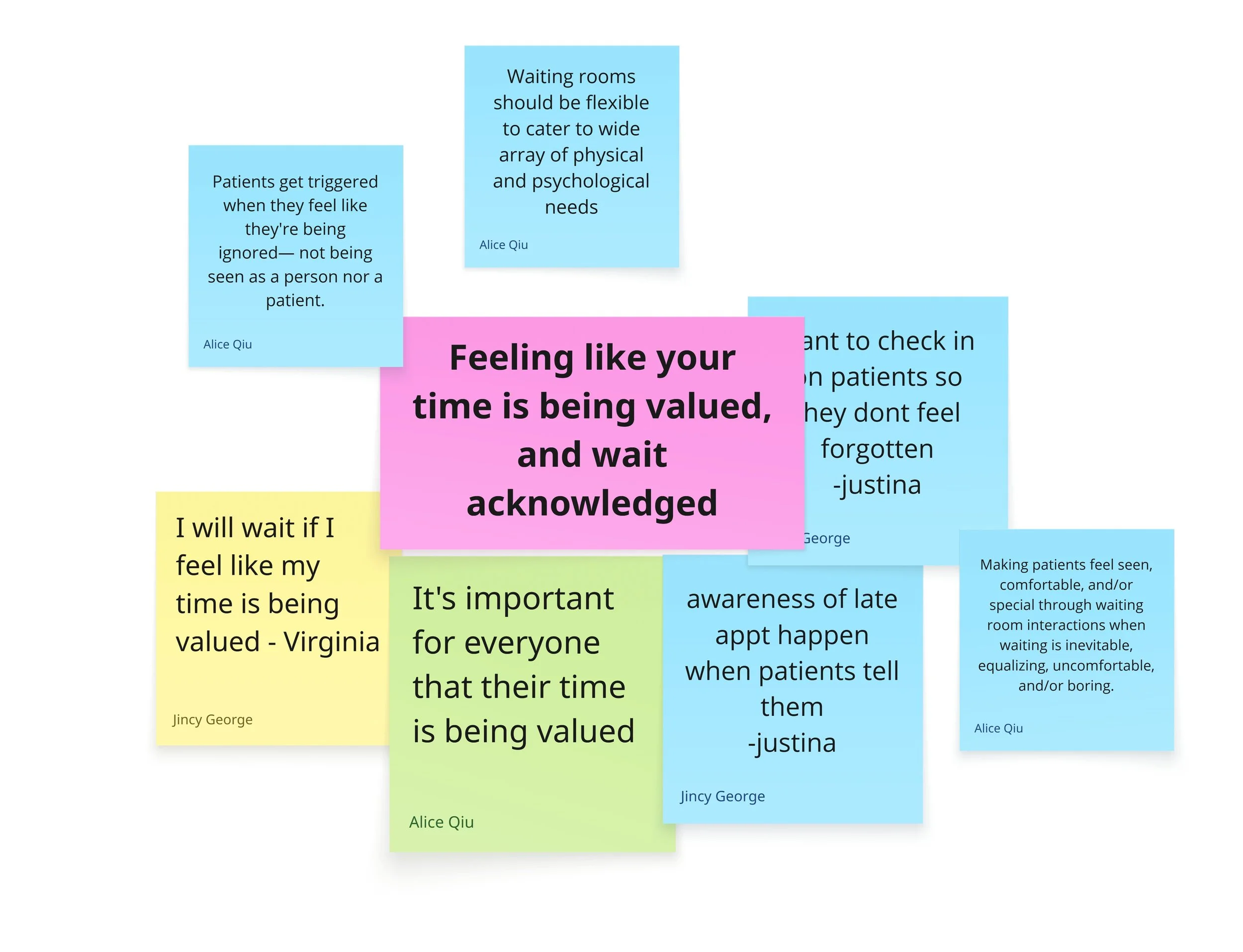
A patient's willingness to wait correlates directly with how valued they feel. By making the queue visible and showing progress through different statuses (checked-in, in progress, completed), CareQ validates that each patient's time matters and the system is moving forward.
Ideation & Prototyping
From Many Concepts to One Solution
Exploring Possible Solutions
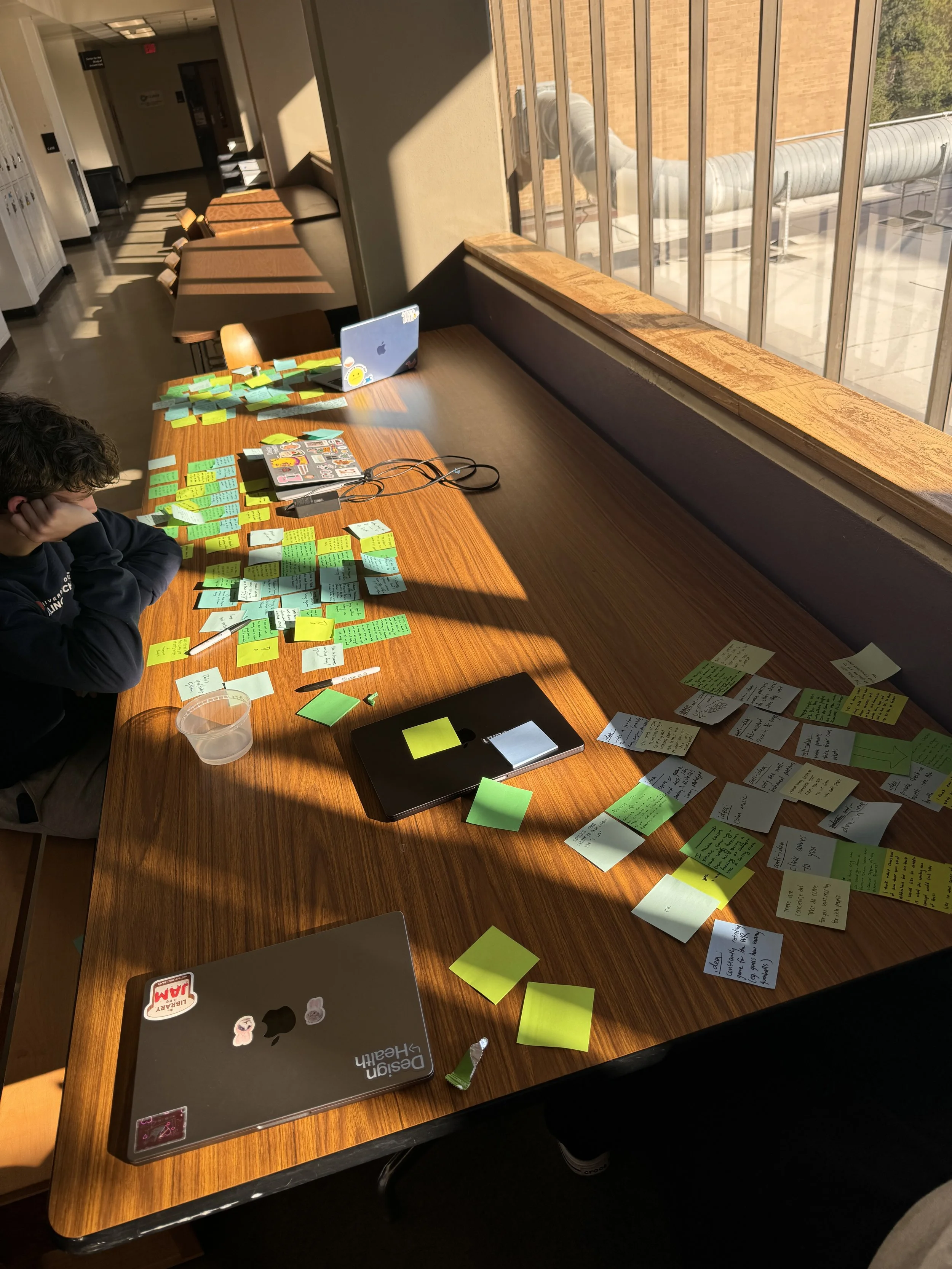
With our research insights defined, we began exploring how to make wait times more transparent without disrupting clinical workflows or adding burden to already-stressed clinic staff. Through collaborative ideation sessions, we generated over 100+ concepts ranging from low-tech physical interventions to digital solutions, from environmental redesigns to communication systems.
We evaluated each concept against our design principles: Does it provide transparency without overpromising precision? Does it communicate value to patients? Does it minimize friction for both patients and staff? Early concepts included physical queue boards, SMS notification systems, waiting room redesigns, and various digital display configurations.
Digital Solution
A Visual Cue for the Queue

Welcome to careQ
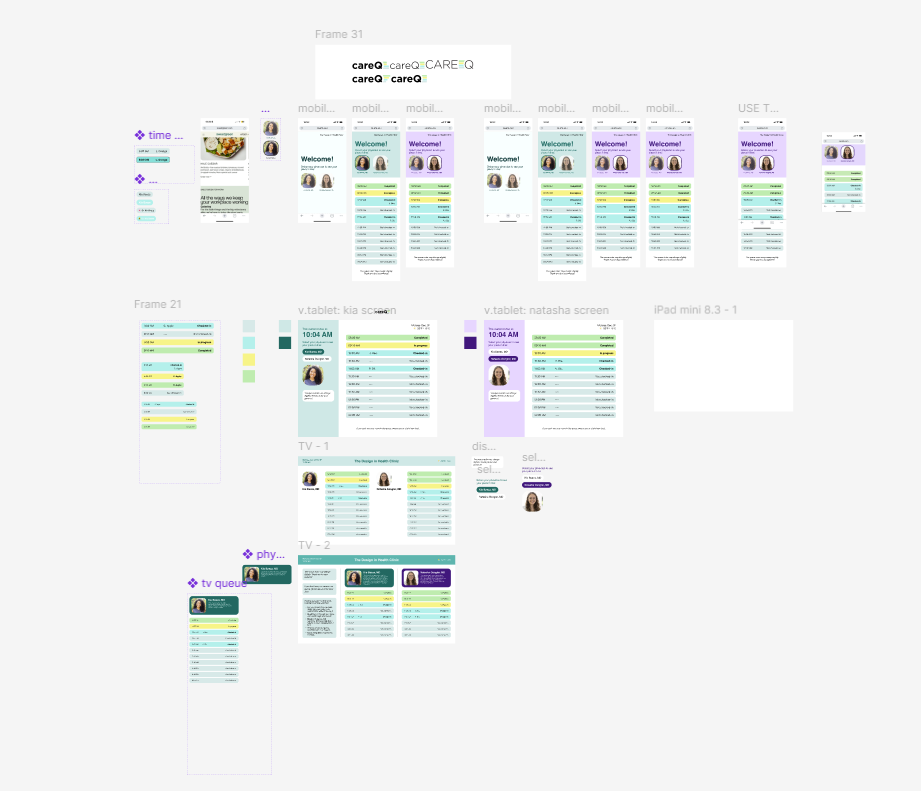
Through rapid prototyping and iteration, we converged on a digital queue visualization system that could integrate seamlessly with existing clinic infrastructure. The multi-modal approach emerged as the strongest solution, providing flexibility through tablets, TVs, and mobile access while respecting patient privacy, minimizing the spread of germs through touchless displays, and requiring minimal staff intervention once implemented.
Systems Integration
Mapping the Patient Journey
Patient Experience with careQ
To understand how CareQ would integrate into existing clinical operations, we created a comprehensive service blueprint that maps every touchpoint from the moment a patient parks their car to when they leave the clinic. This visualization reveals the complex ecosystem of interactions, technologies, and behind-the-scenes processes that make a single patient visit possible.
The blueprint identifies four key CareQ statuses that patients move through: "Not checked-in," "Checked-in," "In progress," and "Completed." Each status change is triggered by existing clinical workflows when a patient checks in at the desk, is called back to the exam room, sees the doctor, or checks out at reception. CareQ integrates with the clinic's existing UCaaS appointment system and EHR to automatically update queue status, requiring minimal additional effort from staff.
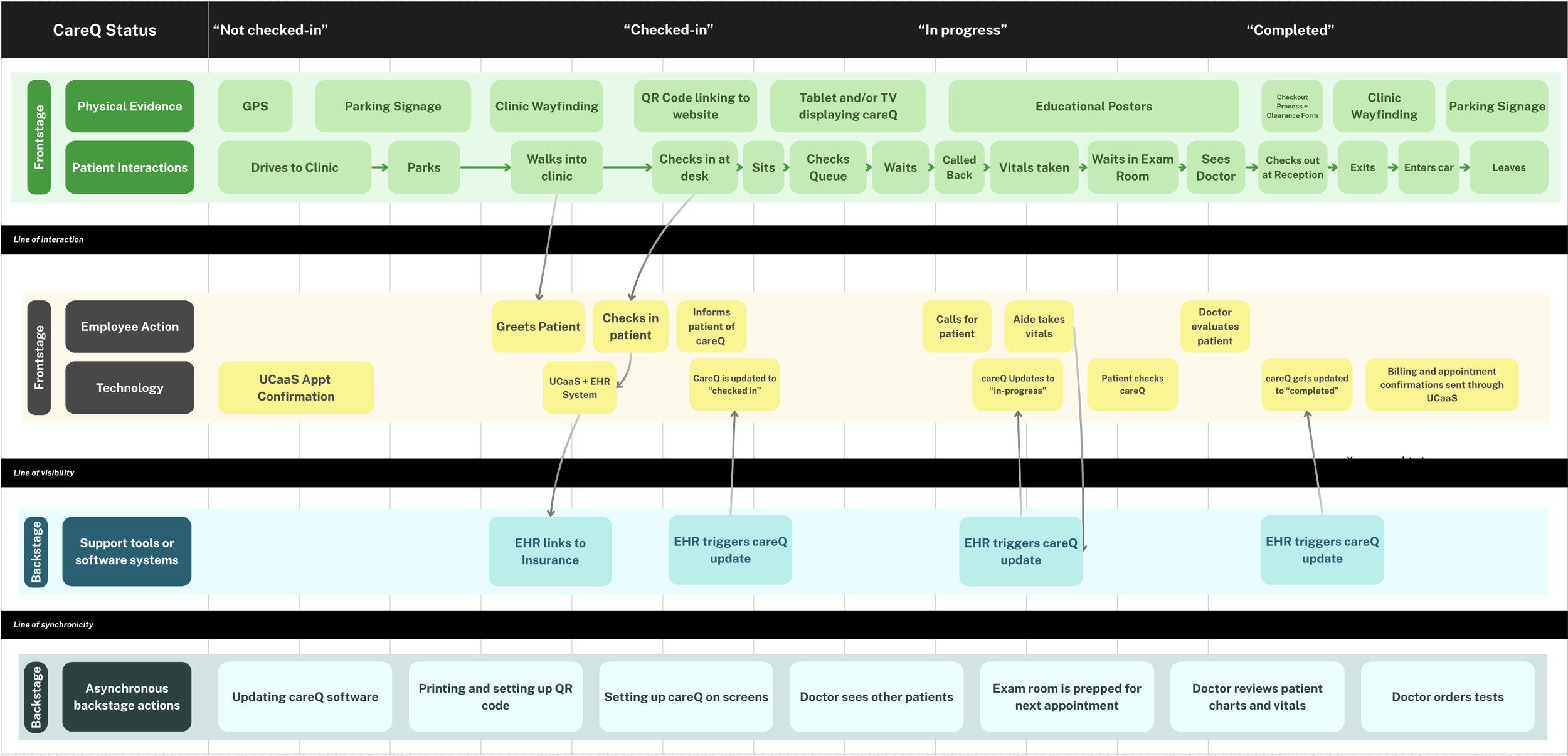
By mapping the frontstage patient experience alongside backstage employee actions and supporting technology infrastructure, we identified critical integration points where CareQ could provide transparency without disrupting established workflows. The blueprint also highlights the asynchronous backstage actions, such as updating software, preparing exam rooms, and reviewing patient charts, that occur invisibly but are essential to keeping the queue moving.
Design Impact
What Transparency Changes in Healthcare
Making Systems Visible Creates Agency
CareQ revealed a fundamental tension in healthcare design: the systems that organize care are often invisible to the people moving through them. Patients aren't asking for perfection; they're asking to understand where they stand. This insight extends far beyond waiting rooms. Across healthcare environments, information asymmetry creates anxiety, and anxiety erodes trust. By making the queue visible, we didn't just reduce patient frustration; we shifted the power dynamic. Patients could make informed decisions about their time, staff fielded fewer anxious questions, and the clinical workflow became a shared experience rather than an opaque process happening to people.
The question this raises for future healthcare design: What other invisible systems would benefit from transparency? Discharge timelines? Test result processing? Specialist referrals? CareQ suggests that when we design for visibility and communication, we're not just improving experiences, we're fundamentally rethinking how people interact with the systems meant to care for them.