
About
Sunspot - Modular Shade for Campus Heat
6 Day Design Challenge
University of Texas at Austin | 2025
Collaborators: Alice Qiu, Katres Brahmnhatt
My Role: 3D Modeling, Rendering, Prototyping, Design Research
Tools: Fusion 360, Keyshot, Photoshop, Miro
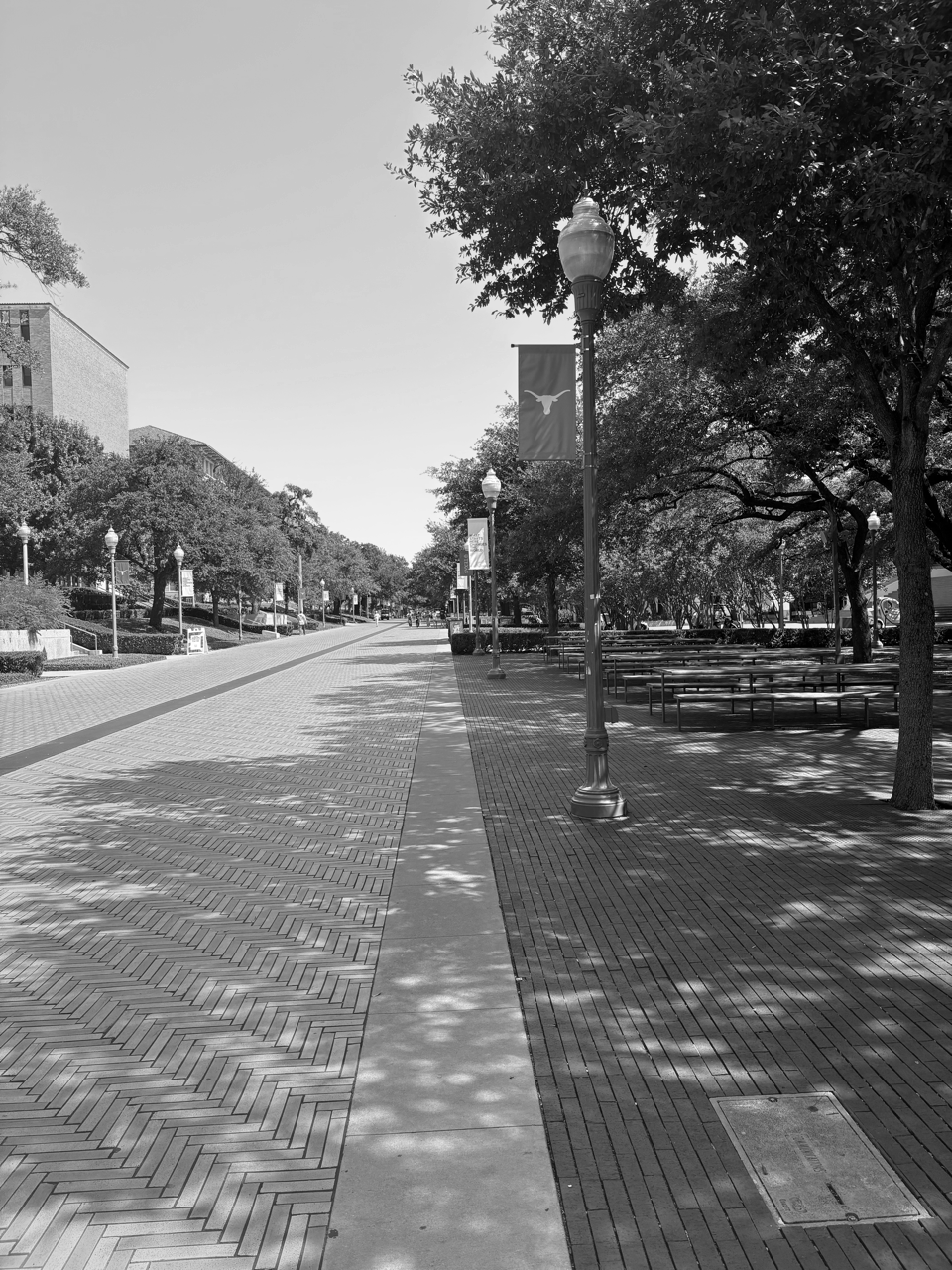
For a summer design studio focused on health and the built environment, our team studied how campus circulation spaces affect student well-being. We focused on major pedestrian corridors at The University of Texas at Austin, where students regularly walk long distances in extreme heat with limited access to shade or rest.
Goal
How might we reduce heat-related stress for students moving across campus during high-temperature periods? Our goal was to design a lightweight, deployable shading system that provides immediate relief without requiring permanent infrastructure.
Outcome
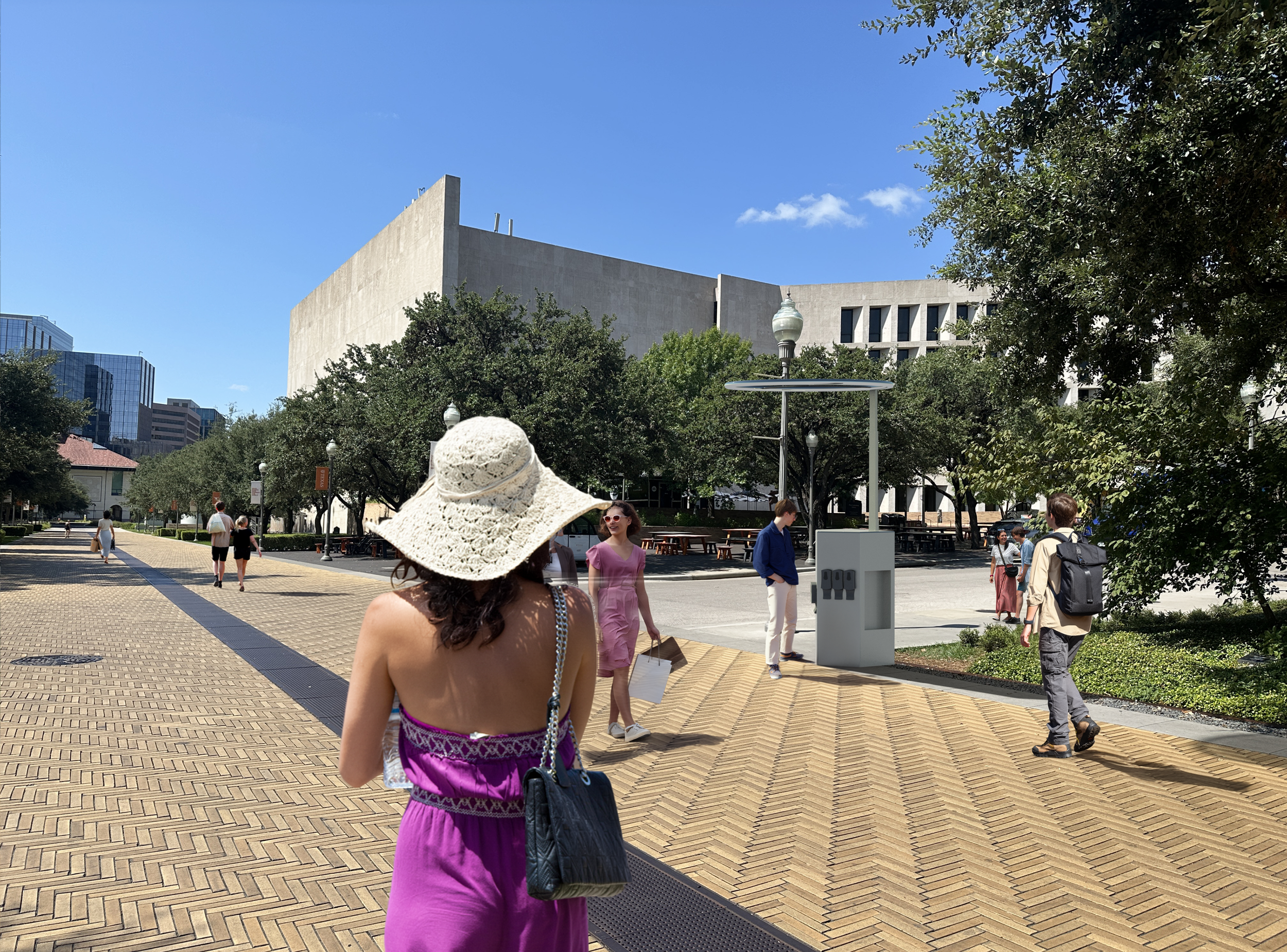
SunSpot proposes a modular network of shade structures that creates temporary cooling and rest zones along high-traffic routes. The system encourages students to pause and recover while remaining flexible enough to adapt to changing circulation patterns, reframing shade as essential campus health infrastructure.
Research & Exploration
Identifying the Issues Around Campus
Listening Before Defining the Problem
We began by looking beyond campus layout and infrastructure to understand how students actually experienced daily movement. Rather than relying solely on spatial analysis, we spoke directly with students to identify the challenges that most affected their routines. These conversations revealed how environmental conditions shaped behavior, energy, and the strategies students used to manage everyday demands.
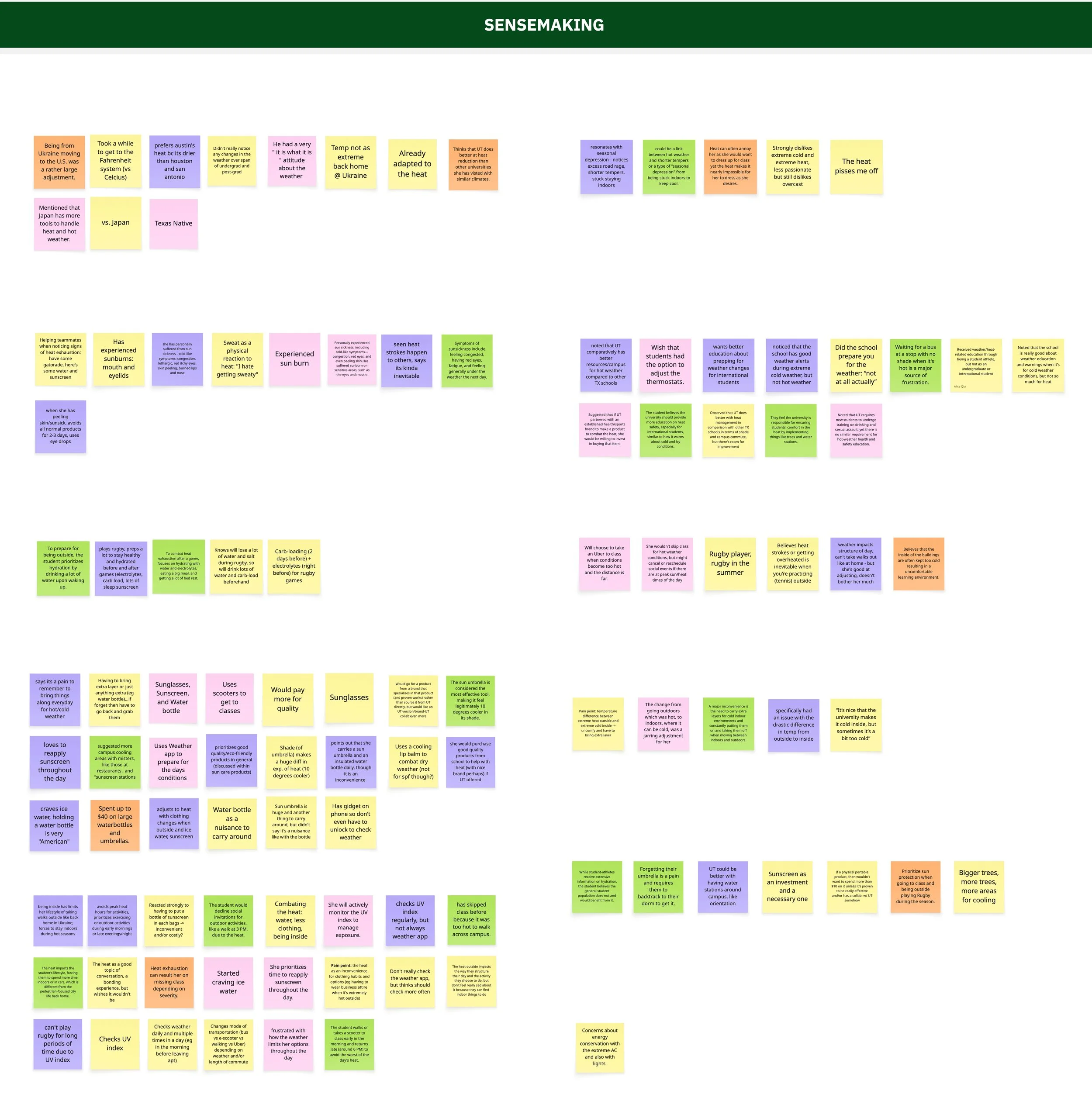
With a range of perspectives gathered, we began organizing patterns across conversations. Using Miro, we clustered recurring themes and prioritized the insights that most consistently shaped students’ experiences. This process transformed scattered observations into a shared understanding of where design intervention could have the greatest impact.
Identifying Shared Constraints
Heat is Felt by All
“Heat is a universal problem being individually experienced ”
Although students described different routes, schedules, and routines, one theme remained constant. Heat affected everyone, yet each person managed it differently. Some adjusted their schedules, others altered their paths, and many simply endured discomfort.
Thermal exposure was not an occasional inconvenience. It was a persistent condition shaping daily behavior. This revealed heat as both a shared and fragmented problem: universal in presence, but individualized in response. Design intervention would need to address this collective burden rather than relying on personal adaptation alone.
Collective Problems Require Collective Solutions
If heat was experienced by everyone but managed individually, then personal coping strategies were not enough. We determined that students were adapting through schedule changes, altered routes, and endurance, compensating for gaps in the built environment rather than being supported by it.
This reframed the role of design. Any intervention would need to operate at the scale of shared movement rather than at the level of individual behavior. It would need to provide relief without requiring planning, effort, or special access. From this, three criteria emerged: the solution had to be adaptable to changing circulation patterns, function without active systems or maintenance, and integrate seamlessly into existing campus infrastructure.
Ideation & Prototyping
Rapid Prototpying Testing Ideas, Not Polishing Them
Exploring the solutions
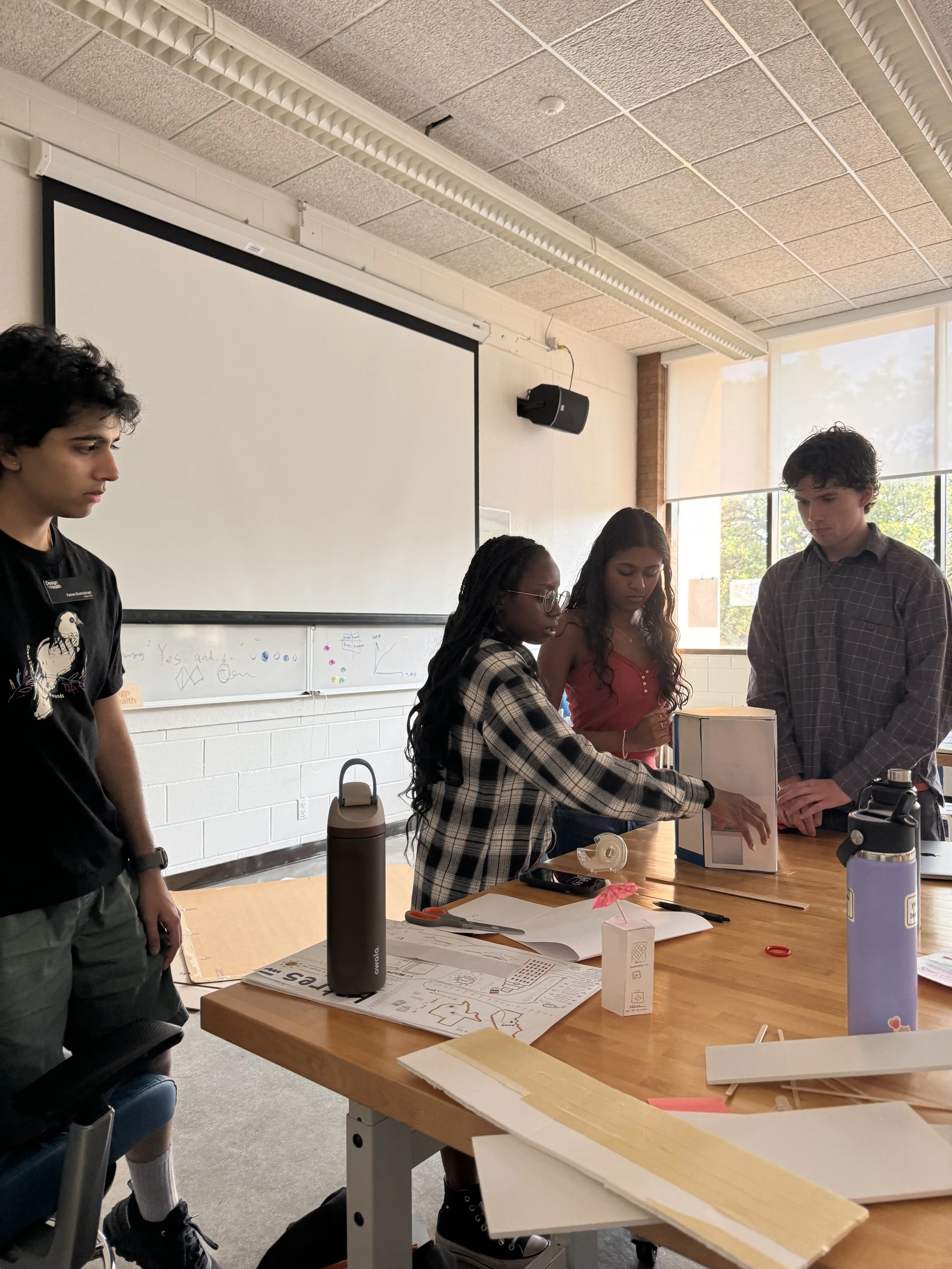
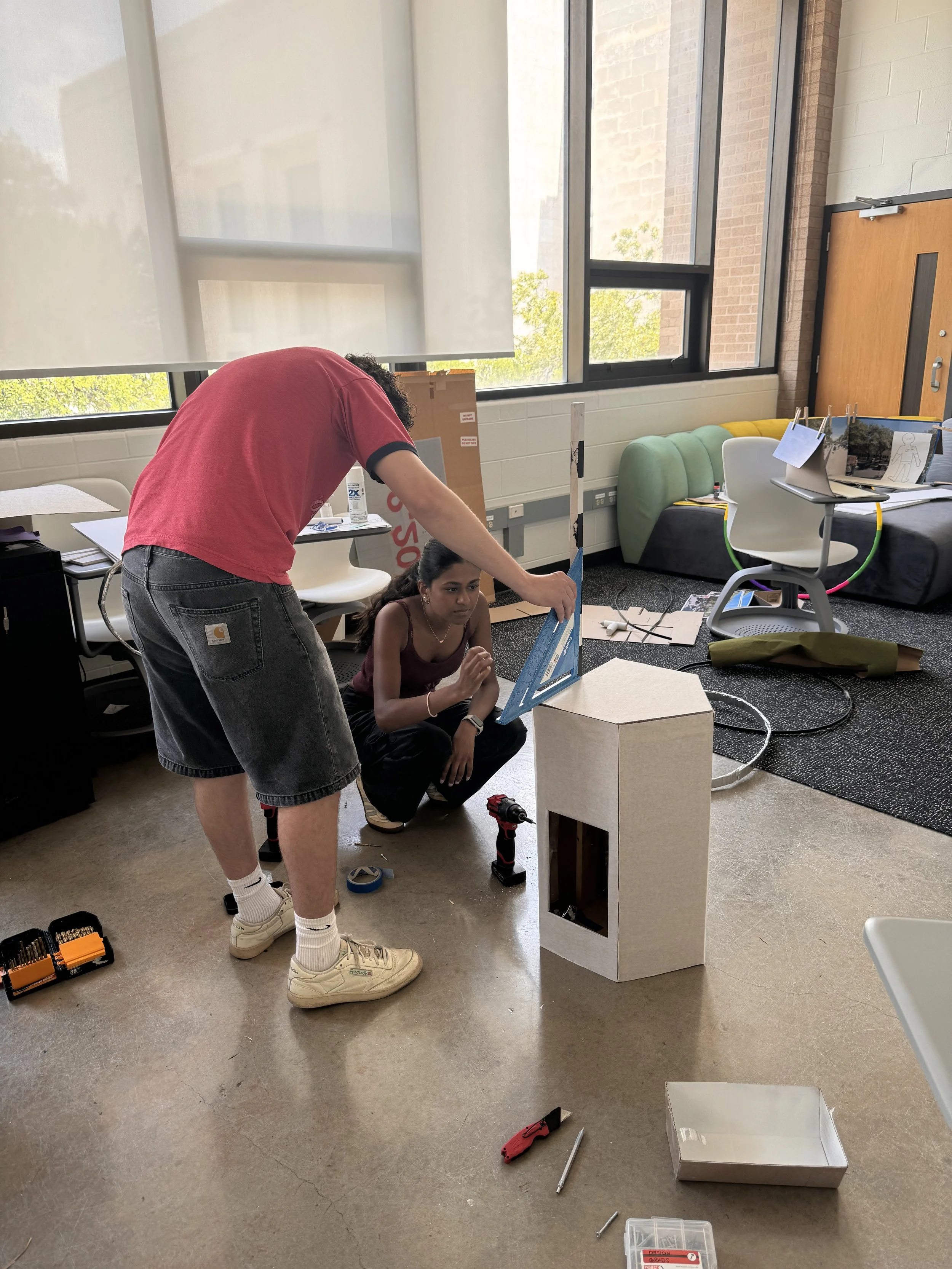
With only six days from research to final concept, we couldn't afford to get precious about our ideas. We moved quickly through rough sketches, cardboard builds, and intentionally unrefined renders — just enough to test whether a concept had legs before committing to it.
In the studio, we constructed physical prototypes from cardboard and scrap materials, working through the form and scale of a freestanding cooling station. Simultaneously, we dropped rough 3D models into photos of actual campus locations to test how the structure might sit within real pedestrian corridors. These weren't meant to be beautiful — they were meant to provoke questions. Could it provide enough coverage? Would students actually stop and use it? What resources would make the biggest difference in the moment?
Each round of making helped us move from abstract criteria to concrete decisions about form, placement, and function. The sprint's speed meant our prototypes stayed ugly and useful, which is exactly what we needed.
Final Concept
A Network of Relief, Not a Single Solution
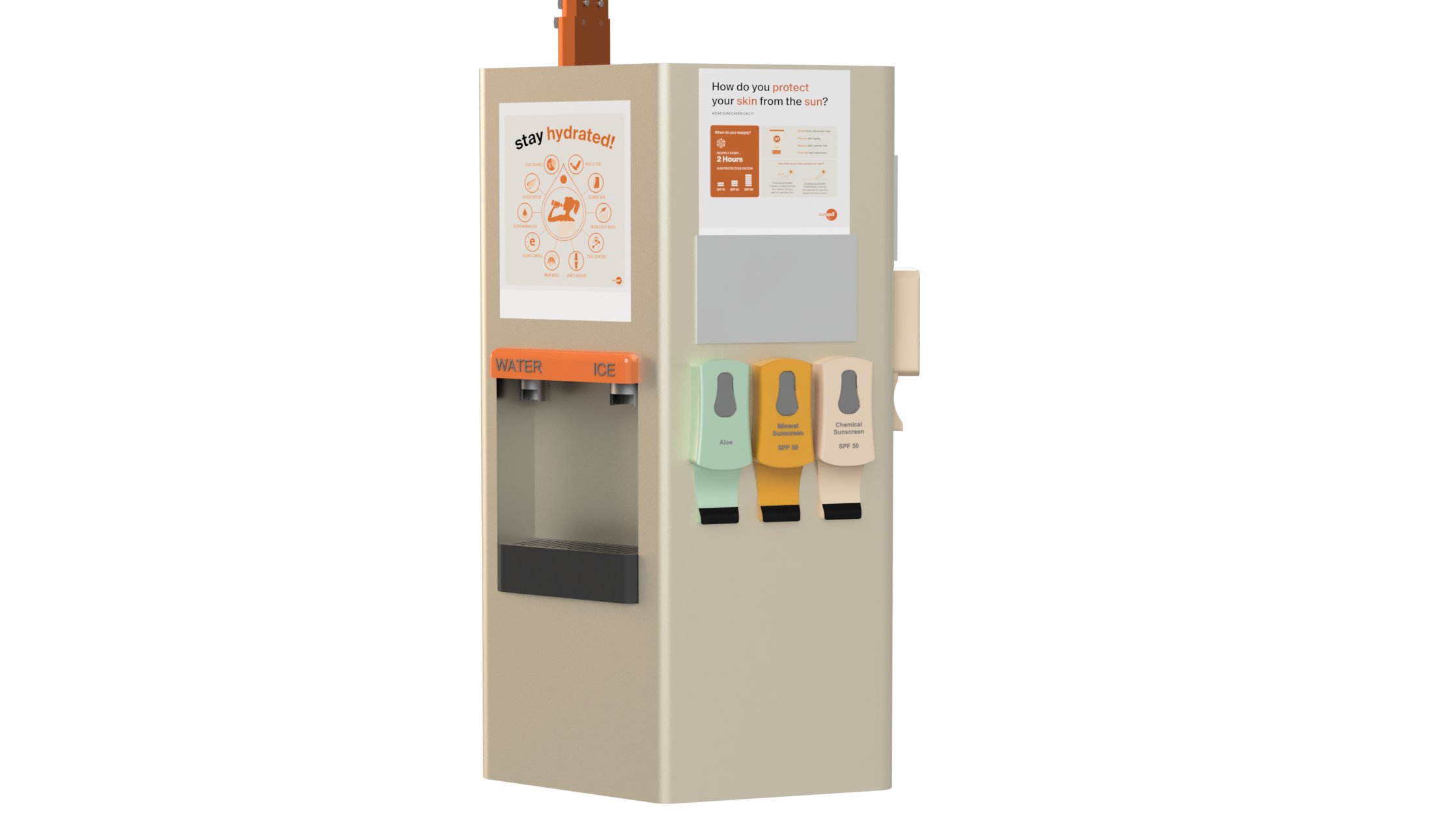
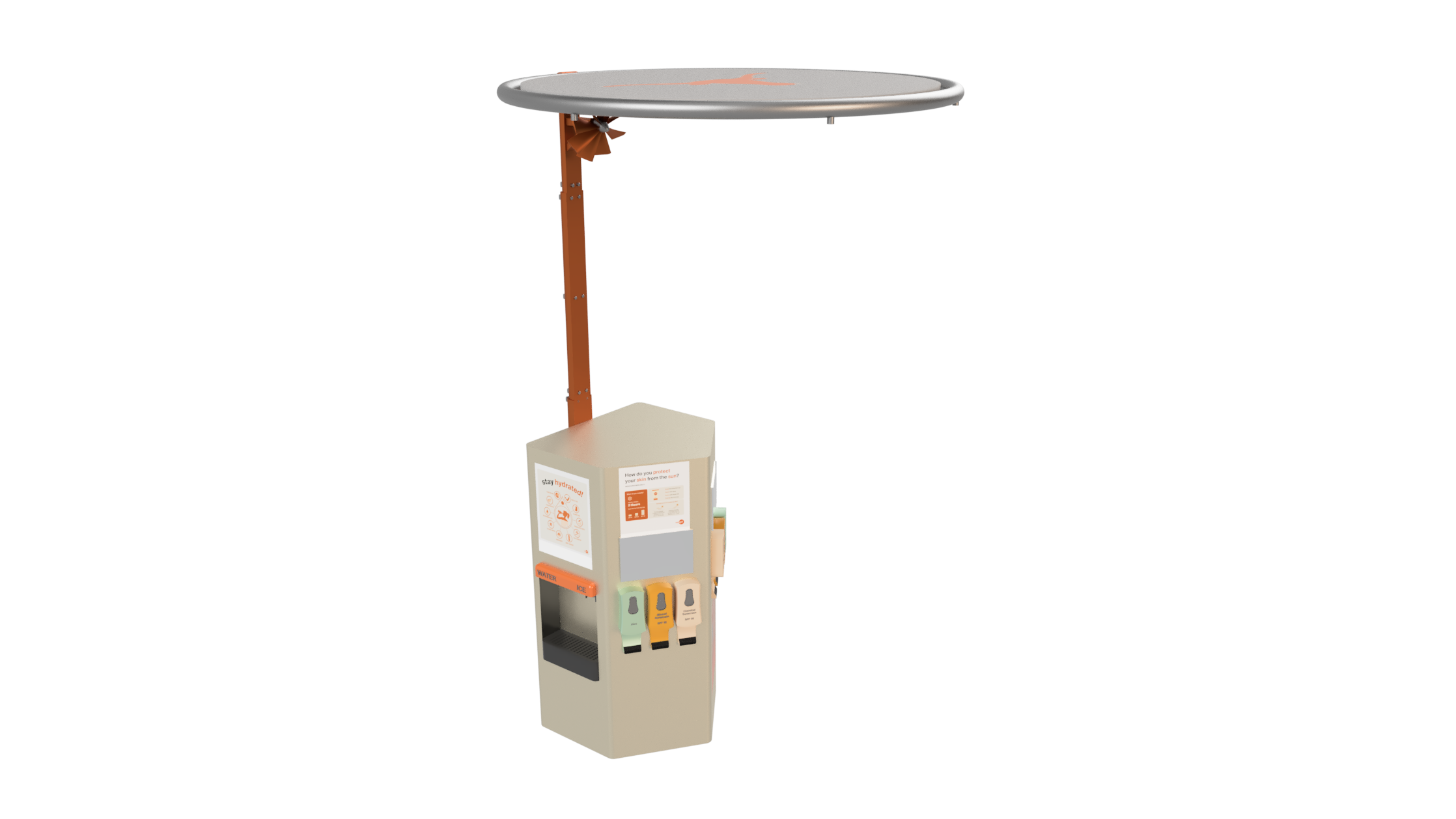
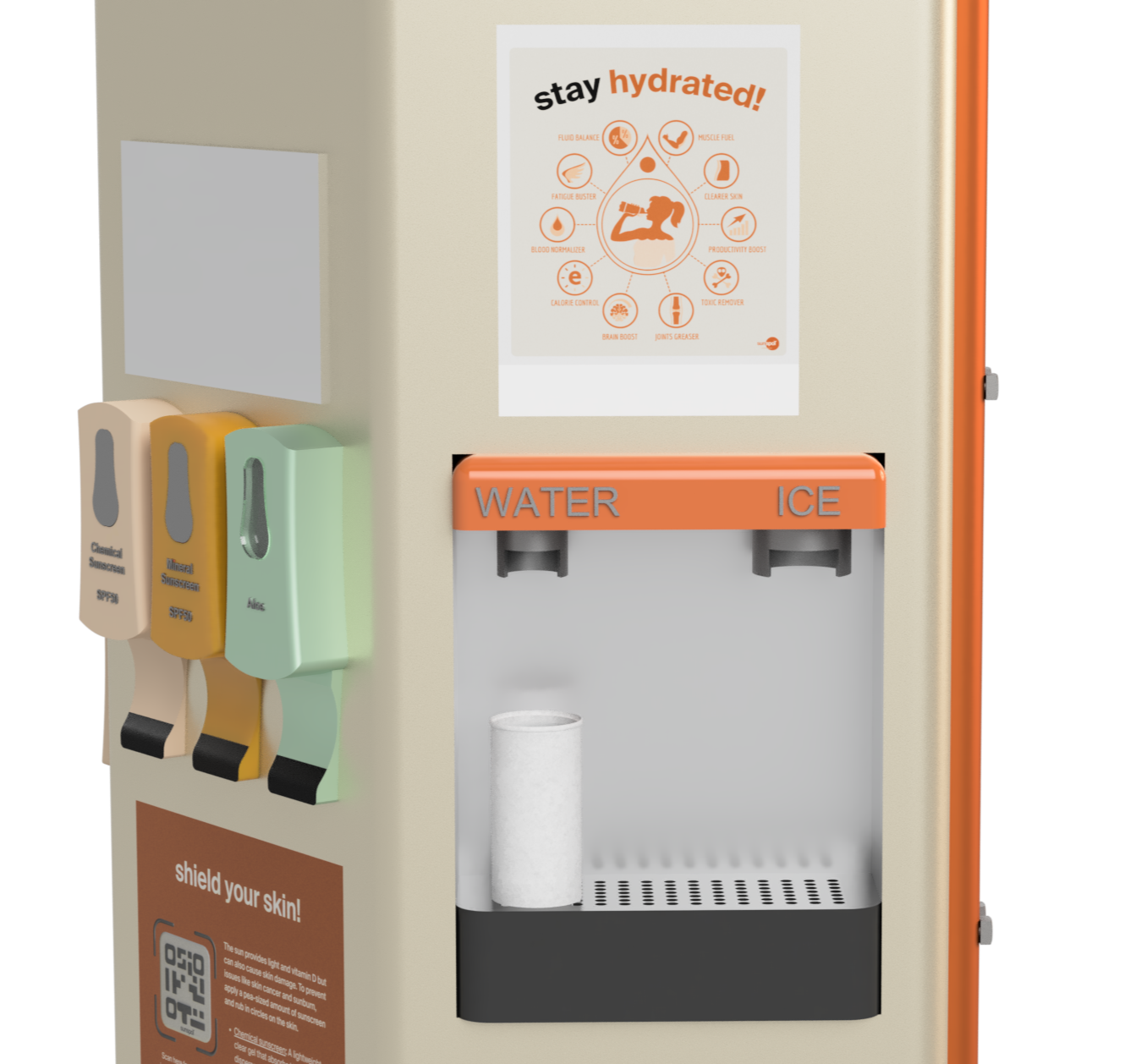
SunSpot is a freestanding modular cooling station placed along high-traffic pedestrian routes across campus. Each unit provides a shaded canopy overhead and houses resources designed to keep students healthy in extreme heat — including mineral and regular sunblock options, varying levels of water and ice refills to support hydration, and signage with guidance on recognizing and preventing heat-related illness.
Rather than a single large installation, SunSpot operates as a distributed network. Multiple stations along exposed corridors create a rhythm of shade and rest, so relief meets students where they already walk. The freestanding design requires no permanent infrastructure, making it flexible enough to be repositioned as circulation patterns shift across seasons or with campus development.
Reflection
What Six Days Taught Us
A six-day sprint doesn't leave room for perfect — and that ended up being the project's biggest strength. The compressed timeline forced us to trust our research, make decisions quickly, and let rough prototypes do the thinking for us rather than overdesigning in isolation.
If we had more time, I'd want to test SunSpot at actual scale on campus, observing whether students engage with the stations and how placement affects foot traffic and dwell time. But the core insight still holds: shade on a hot campus isn't an amenity, it's infrastructure. And designing for heat means designing for the routes people already take, not asking them to seek relief elsewhere.